Trading risks
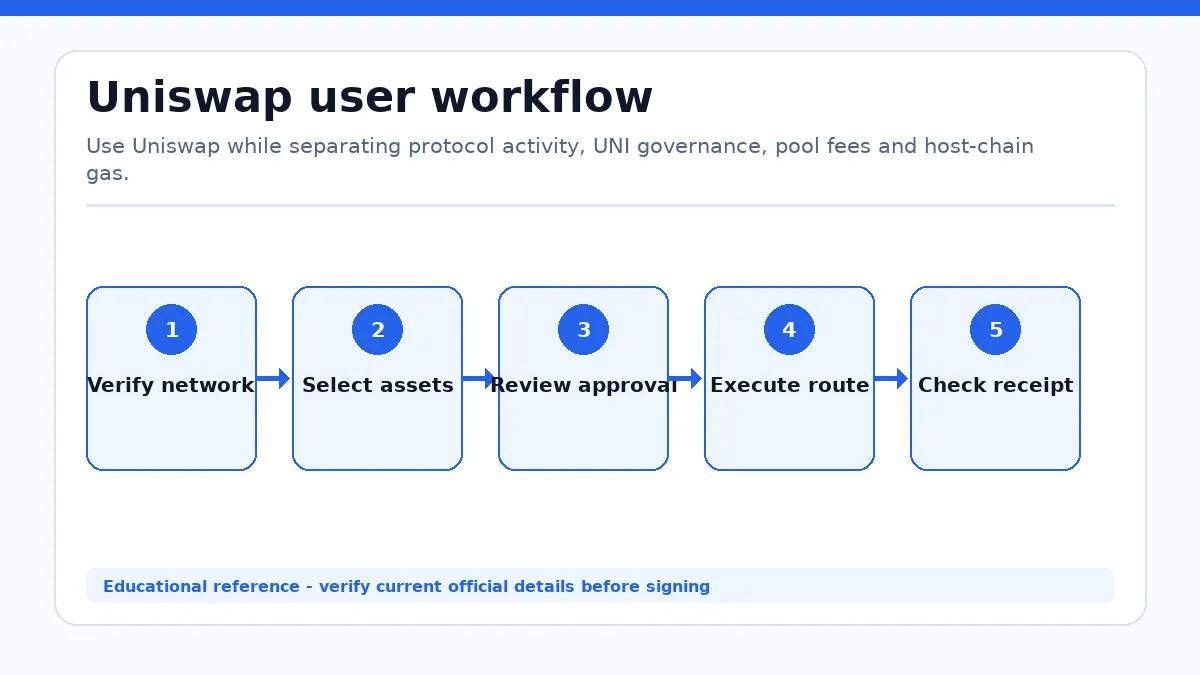
A trader can lose value through price impact, an overly broad slippage setting, adverse movement before inclusion or a fraudulent token. Routing across more pools can improve a quote but adds contract interactions and makes receipt review more important.
Approval signatures deserve the same scrutiny as swaps. Unlimited allowances can remain active after a trade, and phishing interfaces can request permission for an unintended spender.
Liquidity risks and common mistakes
LPs face relative-price movement, out-of-range positions, fee-tier competition, token-specific risk and smart-contract failure. Calling the change impermanent does not mean it will reverse before withdrawal. Concentrated liquidity can magnify both fee efficiency and management error.
Common mistakes include comparing fee income without inventory change, choosing a familiar ticker instead of a verified contract, and assuming every Uniswap deployment has identical liquidity.
Active providers should also account for rebalancing transactions, gas and time spent managing a range. A position can collect substantial fees yet underperform holding if prices move through the range or management costs absorb the income. Passive users should prefer a range and pool whose maintenance demands they can realistically meet.
- Pool depth and price impact
- Range and inventory exposure
- Token and approval risk
- Network and deployment differences
- MEV and transaction ordering