Algorand (ALGO): Fees and Atomic Transaction Groups
Algorand is an account-based smart-contract network using pure proof of stake and cryptographic sortition to select block participants. ALGO is its native currency, transaction fee asset and the stake used by registered online accounts for consensus participation. This page focuses on fees and Atomic Transaction Groups and the checks users need before sending funds, paying fees or using the network.
Prepare a safe Algorand transfer or application action by understanding fees, minimum balances, opt-ins and finality.
Subject:
Algorand
Market mode:
Snapshot Only
Fee asset:
ALGO
Timezone:
UTC
This page does not estimate staking rewards, validate an asset ID, audit an application or operate a participation node.
Content ownership: BitcoinToolkit Editorial TeamTechnical references: Official protocol and developer documentation.Review approach: Technical explanations are checked against primary sources and updated when the network or asset changes.Last content review: Data integration last tested:
Fees and Atomic Transaction Groups
Algorand supports predictable minimum fees and grouped all-or-nothing execution.
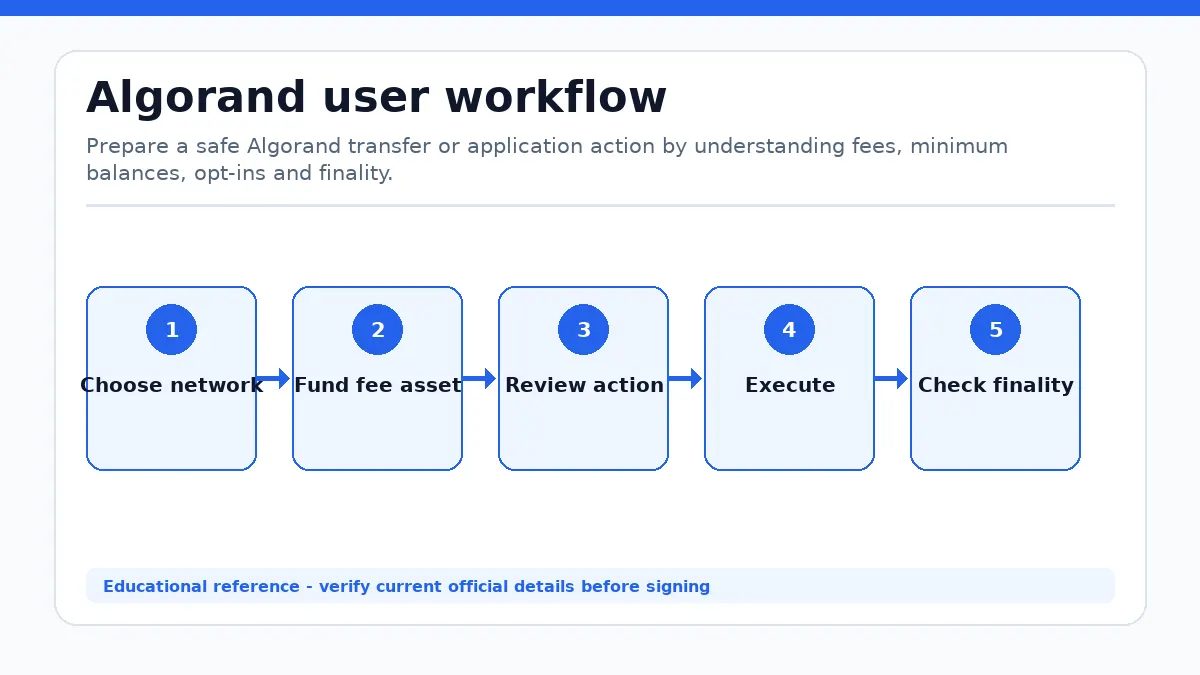
Algorand workflow from the first user decision to a verified outcome.
One group can contain several operations
Transaction fees are paid in ALGO and must meet the protocol minimum or size-based requirement. An application call can create inner transactions. Fee pooling allows one transaction in an atomic group to cover more than its individual share when the total group fee is sufficient.
Every signed transaction still has validity rounds, sender authority and resource constraints. An atomic group succeeds completely or fails completely, which enables exchanges and application workflows without partial state. A failed group is not the same as several independent transfers, and wallet previews should show every group member.
The Next Algorand Step
The displayed ALGO balance can be larger than the amount an account may safely spend.
Minimum balance follows account state
An Algorand account holds ALGO and can opt into assets or applications. Each opt-in and state allocation can increase the protocol minimum balance. Wallets may show total balance and spendable balance separately because reserved ALGO must remain in the account until the associated state is closed or removed.
Asset transfers identify an Algorand Standard Asset by numeric asset ID. A matching name or ticker is not enough. The receiving account usually needs an opt-in before it can receive an asset, and closing an asset holding requires careful selection of the close-out destination.
Consensus participants are selected privately and rapidly from registered online stake.
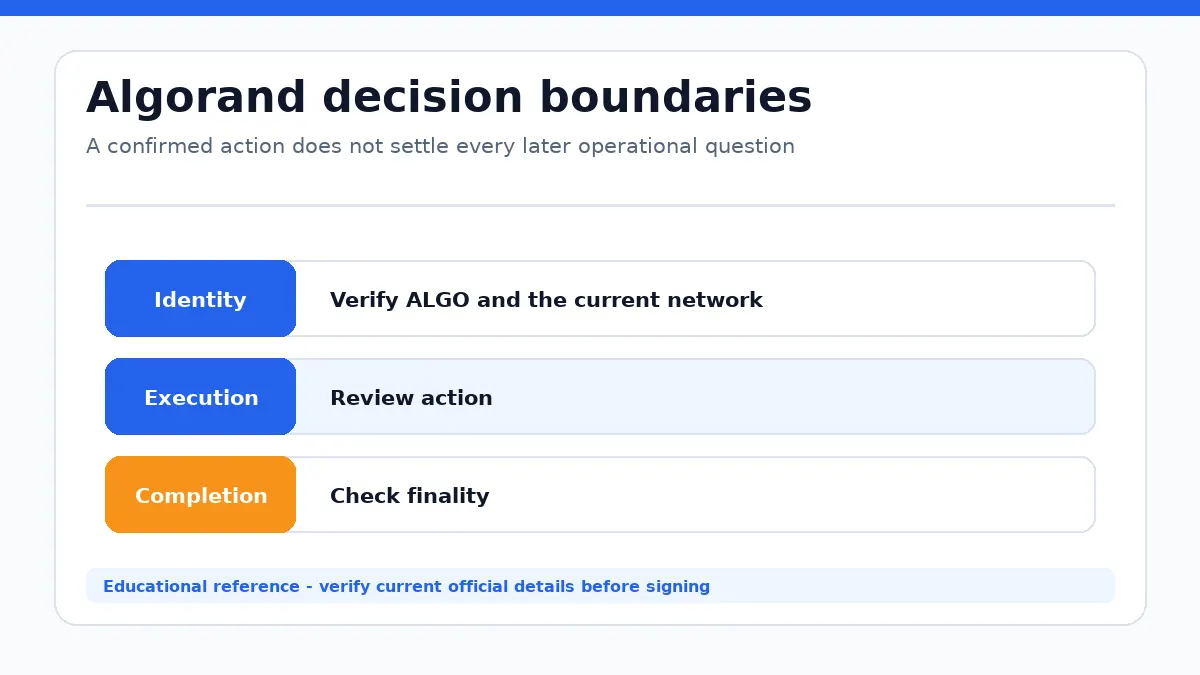
Algorand confirmation does not settle every later operational question.
Participation keys protect spending authority
Algorand uses verifiable random functions to select proposers and voting committees for each round. Once a valid block is certified, the protocol does not normally create competing forks that require users to wait for probabilistic depth. Applications can still wait for indexing or their own processing before showing a result.
Accounts participate online by registering participation and voting keys while keeping spending keys separate. This design reduces the need to expose the main spending key on a node. Operators must renew or manage participation keys according to current protocol requirements and keep node availability independent from wallet custody.
Asset IDs, reserved balance and grouped actions are common sources of confusion.
Read the full transaction group
Confirm the network, recipient and asset ID. Review whether the wallet is opting into an asset, transferring value, rekeying the account, calling an application or closing a balance. A rekey transaction changes signing authority without changing the visible address and deserves special attention.
Keep enough ALGO for minimum balance and fees after the action. Inspect every member of an atomic group and the requested application resources. For consensus participation, separate spending and participation keys, follow current node guidance, and avoid services that request a seed phrase merely to calculate rewards.
A committee proposes and certifies each block through randomly selected participants weighted by online stake. Transactions can be grouped atomically, accounts can opt into assets and applications, and protocol minimum-balance rules reserve ALGO as account state grows.
A Algorand transaction can execute successfully while the application state, contract permission or later exit remains wrong for the user's goal. ALGO is the market-profiled asset. ALGO pays minimum and size-sensitive transaction fees.
What Algorand users should verify and why this design differs
Protocol parameters and incentives can change. The page does not verify an asset or application ID.
For Algorand, the practical sequence is Choose network, Fund fee asset, Review action, Execute, Check finality. Confirm the official destination and current network, then inspect the final balance, position, receipt or documented exit state that actually completes the task: Prepare a safe Algorand transfer or application action by understanding fees, minimum balances, opt-ins and finality.
Algorand Network use FAQ
Why can I not spend my full ALGO balance?
Opt-ins and application state can increase the minimum balance that must remain in the account.
What pays Algorand transaction fees?
ALGO pays protocol transaction fees.
Does Algorand require many confirmations?
Certified blocks have immediate protocol finality, though services may wait for indexing or internal checks.
Known Limitations
Protocol parameters and incentives can change.
The page does not verify an asset or application ID.
Wallets may present grouped transactions differently.
Market Data Methodology
The page uses a CoinGecko aggregated ALGO/USD snapshot. No exchange chart is rendered for this entity.
Market Snapshot Source
CoinGecko aggregated market data (ALGO/USD)
Cache
Snapshot cache is approximately 60 seconds.
Failure Handling
Verified cached data is labeled Cached or Delayed. Missing values remain unavailable.