Theta Network (THETA): Theta Staking and Workload Risks
Theta Network combines an EVM-compatible blockchain with media and distributed compute infrastructure. THETA is used for governance and core-chain staking, while TFUEL pays fees and supports operational activity. This page focuses on theta Staking and Workload Risks and the checks users need before integrating the service or using the token.
Use Theta Network without confusing THETA staking with TFUEL gas or Edge Node participation.
Subject:
Theta Network
Market mode:
Snapshot Only
Fee asset:
TFUEL
Timezone:
UTC
This page does not run a node, stake THETA or TFUEL, estimate rewards, deploy a contract or verify an EdgeCloud workload.
Content ownership: BitcoinToolkit Editorial TeamTechnical references: Official protocol and developer documentation.Review approach: Technical explanations are checked against primary sources and updated when the network or asset changes.Last content review: Data integration last tested:
Theta Staking and Workload Risks
Node income depends on protocol rules, eligibility and real operation.
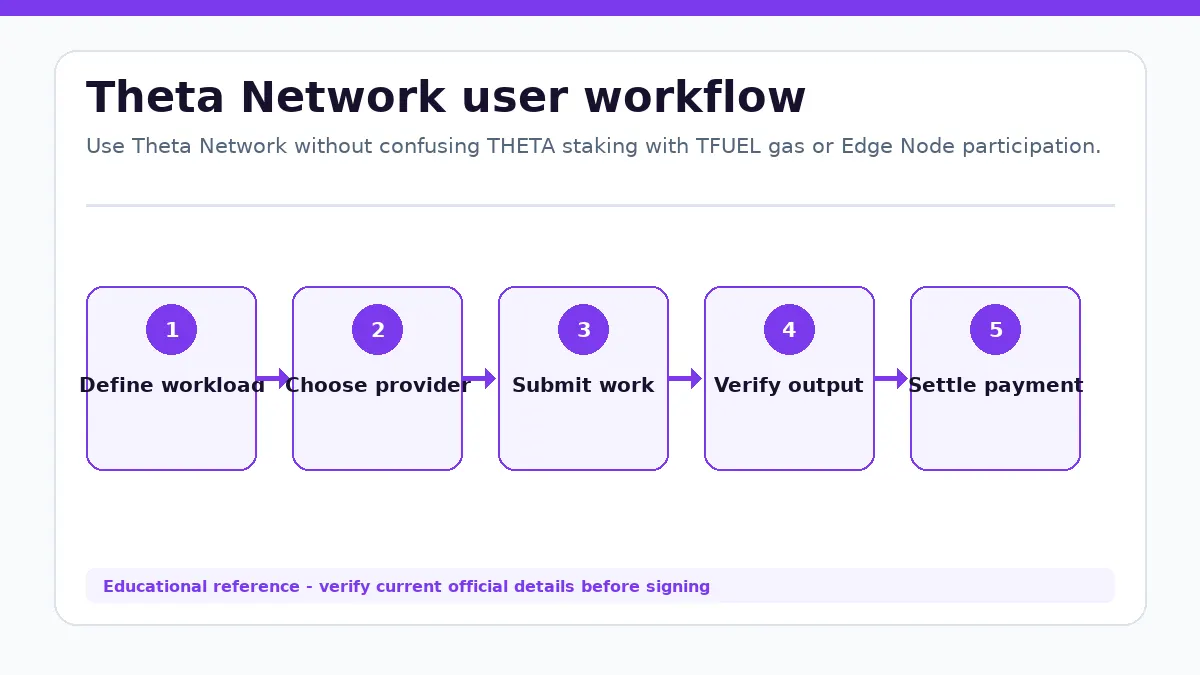
Theta Network workflow from the first user decision to a verified outcome.
Before staking or running infrastructure
Check the current minimum stake, node eligibility, reward schedule, uptime requirement and withdrawal delay. Guardian rewards can arrive probabilistically rather than on a fixed personal schedule. Edge Node work depends on eligible jobs, software behavior and service demand as well as TFUEL staking.
Do not send THETA when a fee request requires TFUEL, use an unverified node summary or assume an Enterprise Validator identity endorses an application. Market price, staking rewards and compute demand can move separately. Keep signing keys and node keys protected according to their different roles.
Why Theta Network's Design Matters
A Theta wallet may need both assets for a staking or contract workflow.
Staking asset versus operating asset
THETA is the fixed-supply governance token and the asset staked to core Validator or Guardian nodes. TFUEL is the operational token used for transfers, smart-contract execution and payments for supported network services. A THETA balance does not pay gas, and a TFUEL balance does not substitute for the THETA minimum required by a Guardian workflow.
Keep enough TFUEL available before depositing or withdrawing stake. Verify which asset an exchange supports, because both symbols belong to the ecosystem but have different market identities and addresses. Contract tokens add another layer and still require TFUEL for execution.
Validators, Guardians and Edge Nodes Are Separate Roles
Only the first two participate directly in core-chain block security.
Three participation paths
Validator nodes propose, vote on and finalize Theta blocks. Guardian nodes seal blocks and check validator behavior, providing a broader community security layer. Edge Nodes perform media, AI or other compute tasks through Theta EdgeCloud and are not simply another name for blockchain validators.
THETA is staked to Validators or Guardians and rewards are paid in TFUEL. Elite Edge Node participation uses TFUEL under separate requirements. Users should select the node type first, then verify its stake asset, minimum, hardware, uptime and withdrawal rules instead of comparing all advertised yields as equivalent.
TFUEL Pays for Theta EVM Execution
Theta smart contracts use familiar EVM concepts with a different gas asset.
Account and contract checks
Theta transactions use accounts, nonces and gas limits, and TFUEL funds the fee. A contract call can transfer a token, change an allowance or invoke a Metachain application. Review the target address, method, amount and maximum fee before signing.
EVM compatibility does not make an Ethereum token automatically native on Theta. Confirm the Theta deployment and supported bridge route. A reverted call can consume TFUEL, and a successful onchain transaction does not prove that an offchain compute result is correct or complete.
Choose the Next Theta Check
Start with the asset and node role involved.
Transfer, stake or compute
For a transfer or contract call, verify the Theta network and retain TFUEL for gas. For Guardian staking, confirm the node summary and current THETA requirement. For an Edge Node, review TFUEL staking and workload requirements separately.
Use wallet tools for addresses, staking calculators only as estimates and official node documentation for current operational settings. Never infer one role from a shared Theta brand label.
A validator committee proposes and finalizes blocks, Guardian nodes add a second security layer and Edge Nodes provide separate compute or media services. The dual-token design prevents THETA market balances from being mistaken for spendable gas.
A Theta Network payment can settle even when useful work, storage, availability or output quality has not been verified for the user's requirement. THETA is the market asset shown in the snapshot. TFUEL pays Theta transaction, contract and operational fees.
What Theta Network users should verify and why this design differs
Stake minimums and node requirements can change. EdgeCloud workloads have application-layer dependencies.
For Theta Network, the practical sequence is Define workload, Choose provider, Submit work, Verify output, Settle payment. Confirm the official destination and current network, then inspect the final balance, position, receipt or documented exit state that actually completes the task: Use Theta Network without confusing THETA staking with TFUEL gas or Edge Node participation.
Theta Network Resource use FAQ
What pays Theta Network fees?
TFUEL pays transaction and smart-contract gas.
What is THETA used for?
THETA supports governance and staking to core Validator or Guardian nodes.
Is an Edge Node a blockchain validator?
No. Edge Nodes provide distributed compute or media services under a separate participation model.
Known Limitations
Stake minimums and node requirements can change.
EdgeCloud workloads have application-layer dependencies.
The page does not operate a node or estimate rewards.
Market Data Methodology
The page uses a CoinGecko aggregated THETA/USD snapshot. No exchange chart is rendered for this entity.
Market Snapshot Source
CoinGecko aggregated market data (THETA/USD)
Cache
Snapshot cache is approximately 60 seconds.
Failure Handling
Verified cached data is labeled Cached or Delayed. Missing values remain unavailable.