Skip to content
BitcoinToolkit

1inch (1INCH): Classic and Fusion Create Different Commitments

1inch is a multichain swap-routing protocol family. Classic aggregation builds executable routes across liquidity sources, while Fusion uses signed intents filled by competing resolvers. 1INCH supports governance and resolver participation. This page focuses on classic and Fusion Create Different Commitments and the checks users need before using the protocol or evaluating the token role.

Swap through 1inch while distinguishing routed transactions from resolver-filled intent orders.

Subject:
1inch
Market mode:
Snapshot Only
Fee asset:
varies
Timezone:
UTC

This page does not quote a swap, approve a token, guarantee a Fusion fill, verify a resolver or recover a cross-chain order.

Content ownership: BitcoinToolkit Editorial Team Technical references: Official protocol and developer documentation. Review approach: Technical explanations are checked against primary sources and updated when the network or asset changes. Last content review: Data integration last tested:

Classic and Fusion Create Different Commitments

Both can exchange tokens, but the wallet signs a different kind of action.

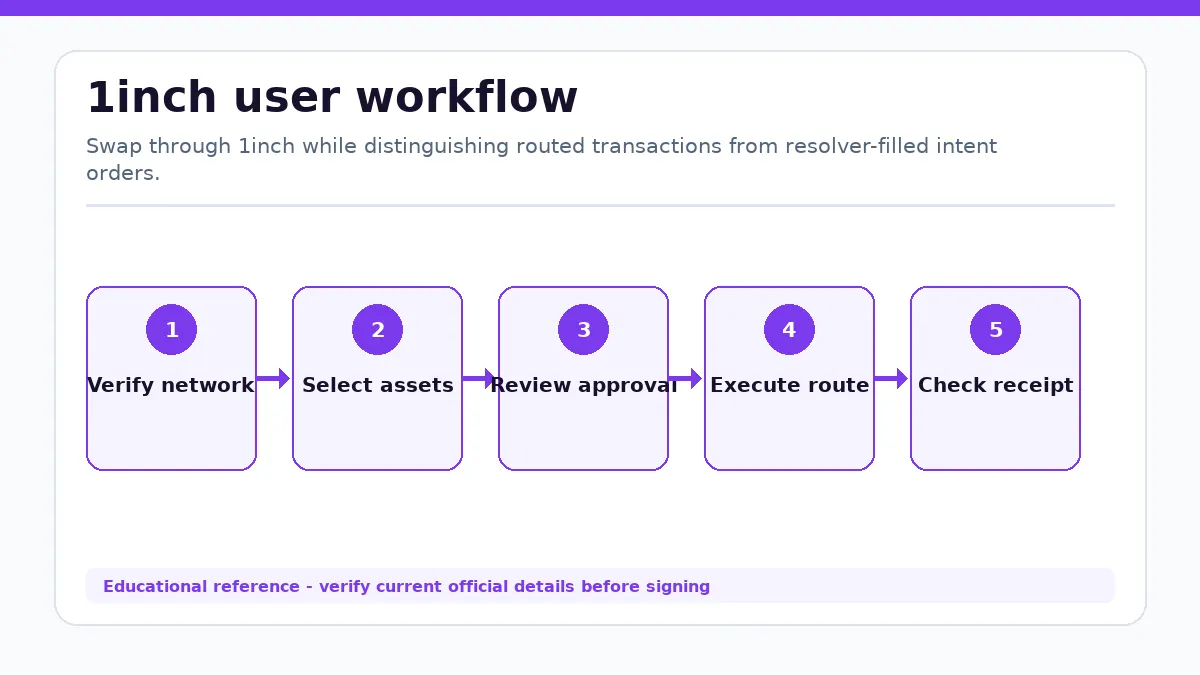
1inch workflow showing Verify network, Select assets, Review approval, Execute route, Check receipt
1inch workflow from the first user decision to a verified outcome.

Transaction route versus intent order

Classic mode asks the wallet to approve the input token when required and submit a transaction through an aggregation router. Pathfinder can split or combine liquidity across integrated protocols. The user pays the selected network gas and the transaction either executes under its onchain conditions or reverts.

Fusion asks the user to sign an order defining token amounts, auction behavior, expiration and fill permissions. Registered resolvers compete to execute it and pay settlement gas under current protocol rules. A gasless user experience does not mean no economic cost: the offered rate and resolver economics remain part of the order.
A Fusion Order Can Fill, Partially Fill or Expire

A wallet signature authorizes conditions; it does not promise immediate execution.

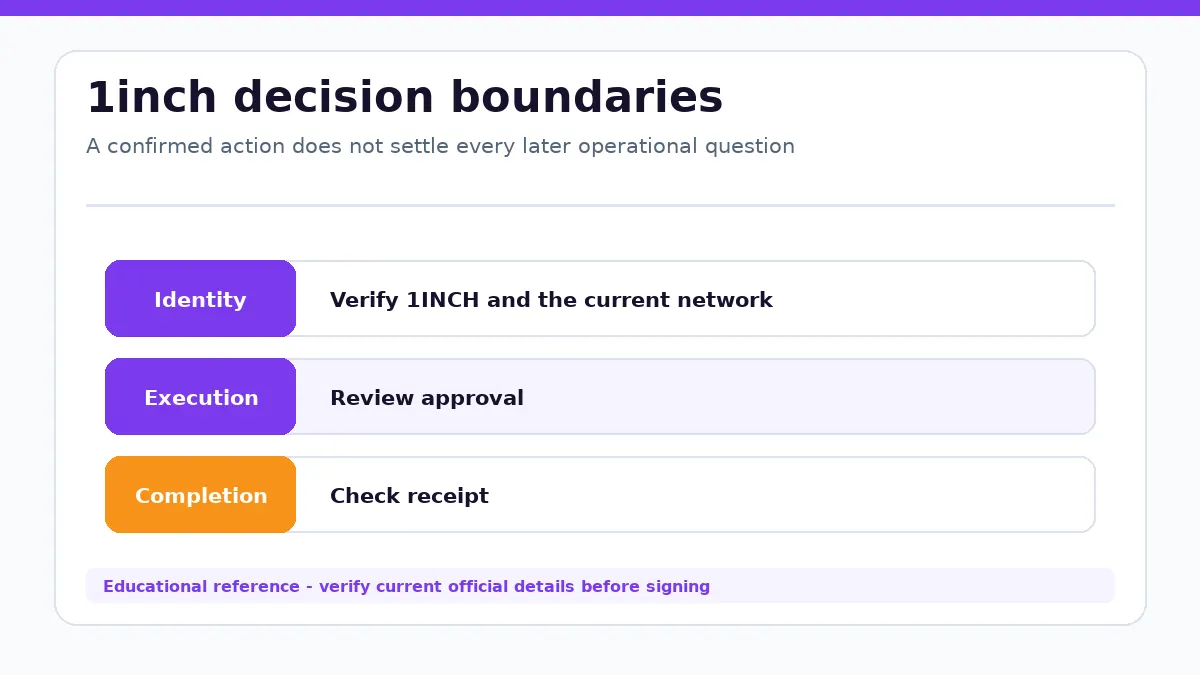
1inch decision diagram separating identity, execution and completion checks
1inch confirmation does not settle every later operational question.

Auction and resolver state

Review minimum return, auction duration, partial-fill setting and destination before signing. Track the order identifier separately from a blockchain transaction hash. If an order expires without a fill, confirm its state in the official interface before submitting a replacement, because duplicate signed intents or unresolved cross-chain escrows require different handling from a reverted Classic transaction.

Approval and Token Identity Remain User Responsibilities

Aggregation does not certify every token or liquidity source.

Contracts, routes and received amounts

Verify network, token contract, decimals, router or permit target, allowance amount and wallet output before authorizing a Classic route. The same ticker can identify unrelated contracts. Fee-on-transfer, rebasing, restricted or malicious tokens may not behave like the quote model expects, and a route can use several pools with separate price impact.

Compare the final minimum received, not only the headline price. Keep the host-chain gas asset for Classic execution, approval and revocation. For Fusion, verify the domain and order fields rather than approving an arbitrary spender. Never treat a sponsored transaction, resolver payment or interface label as proof that a token contract is authentic.

1inch Risks Before Completion

Match the evidence to the selected execution mode.

What 1inch users should verify and why this design differs

For Classic, save the route, router, allowance and transaction hash. For Fusion, save the signed-order identifier, expiration and fill status. For Fusion+, record both chains, escrow state and destination receipt. 1INCH holders evaluating staking should review lock, delegation, governance and resolver rules separately from swap execution.

Do not compare quotes captured at different blocks or on different networks as identical. Confirm the output balance after settlement and revoke unnecessary approvals. Continue to Ethereum, Solana or another host-chain page for fee and transaction behavior, then use wallet tools for the addresses actually involved.

1inch is a multichain swap-routing protocol family. 1INCH supports governance and resolver participation.

1inch Swaps and liquidity FAQ

Can a 1inch swap succeed at a worse price than the preview?

Yes. Pool state, routing, price impact, slippage settings, fees and transaction ordering can change execution.

Known Limitations

Market Data Methodology

The page uses a CoinGecko aggregated 1INCH/USD snapshot. No exchange chart is rendered for this entity.

Market Snapshot Source
CoinGecko aggregated market data (1INCH/USD)
Cache
Snapshot cache is approximately 60 seconds.
Failure Handling
Verified cached data is labeled Cached or Delayed. Missing values remain unavailable.
Snapshot Status
Delayed
Report Issue
Report a market-data problem →

Technical Sources

Selected primary sources support the operational explanations. Market-provider attribution remains separate.

Editorial Information

Verified technical content, reviewed sources and update history.

Published
Last Review
Data Verification
Sources
Official documentation