Fast ordering and reproducible state
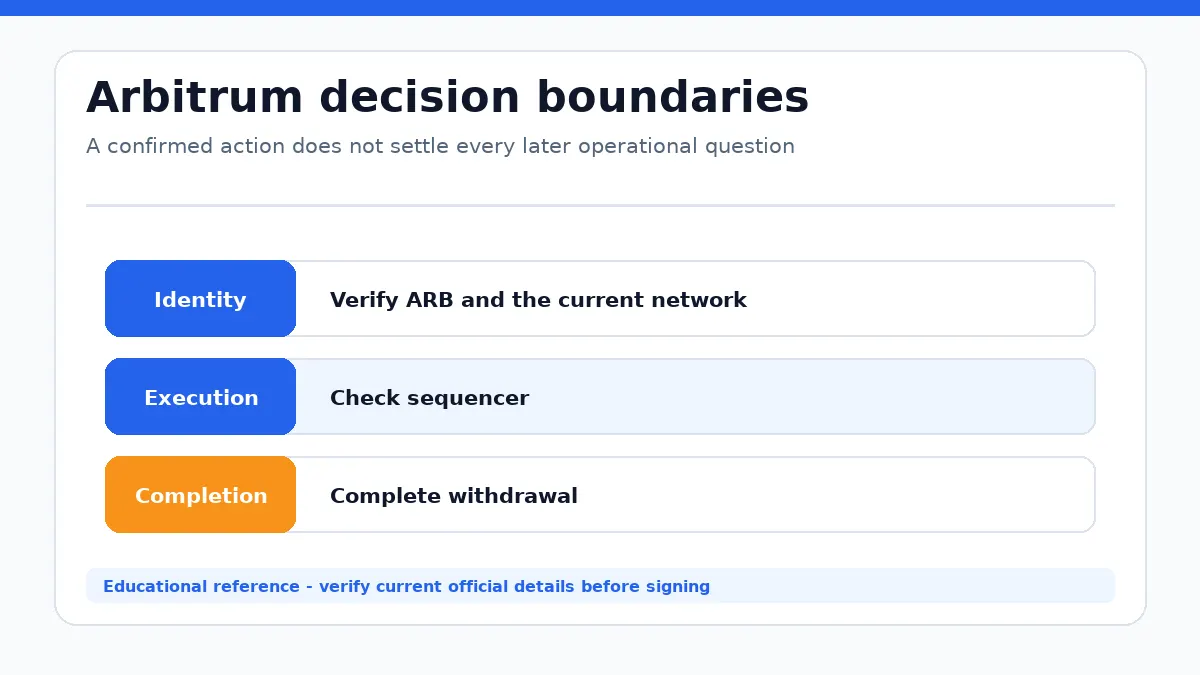
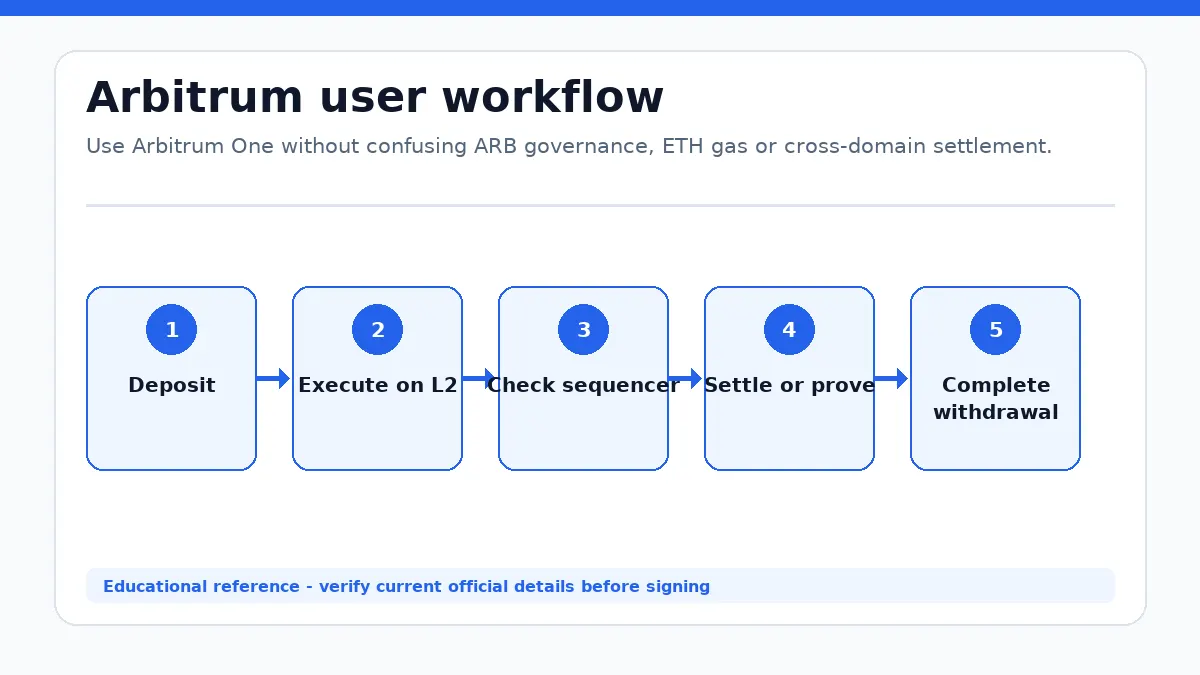
The sequencer receives transactions, establishes an order and publishes a feed that gives users rapid visibility. Arbitrum nodes execute that ordered data through Nitro to derive L2 blocks and receipts. A sequencer acknowledgment is useful for application responsiveness but is not identical to Ethereum-finalized rollup state.
Batch data and assertions move through the Ethereum-linked protocol. The rollup design allows state claims to be challenged under the active dispute mechanism. Users do not run a fraud proof for every payment, but applications should understand which status they accept before delivering irreversible goods or releasing another-chain assets.